
What Is a Barcode and How Is It Used?
In short: A barcode is a number or text encoded as bars or squares that scanners and cameras can read. Retail products use the 13-digit EAN-13; in Turkey numbers are obtained from GS1 Turkey and start with 868/869. Barcodes speed up sales, stock control and tracking and reduce errors.
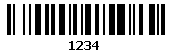
How does a barcode work?
A scanner detects the dark–light transitions with a laser or camera, decodes the pattern according to the barcode standard and sends the digits or letters to the computer, where they are matched to the product name, price and stock.
Types of barcodes
| Type | Examples | Use |
|---|---|---|
| 1D (linear) | EAN-13, EAN-8, UPC, Code 128, Code 39, ITF | Retail, cartons, serial numbers |
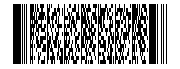
| 2D (matrix) | QR code, Data Matrix, PDF417 | Payments, pharma tracking, tickets, IDs |
A short history
- 1949–1952: Norman Joseph Woodland and Bernard Silver patented the barcode idea.
- 1973: UPC adopted as the US retail standard.
- 1974: first retail product (a pack of chewing gum) scanned at a checkout.
- 1977: EAN system founded in Europe – today managed worldwide as GS1.
How to print barcodes
Design barcode labels with Barcode Label Pro and print them on A4 label sheets or roll barcode printers. It supports 42 barcode standards, calculates check digits automatically and prints in bulk from Excel.
Frequently asked questions
What is a barcode?
A number or text encoded as bars or squares that scanners and cameras can read.
Where do I get a product barcode?
Retail EAN-13 numbers are obtained from GS1 (in Turkey, GS1 Turkey).
What is the difference between a barcode and a QR code?
Linear barcodes are one-dimensional and hold little data; QR and Data Matrix codes are two-dimensional and hold much more in a small area.


Comments (0)