
Self-Adhesive Binder Spine Label Pocket
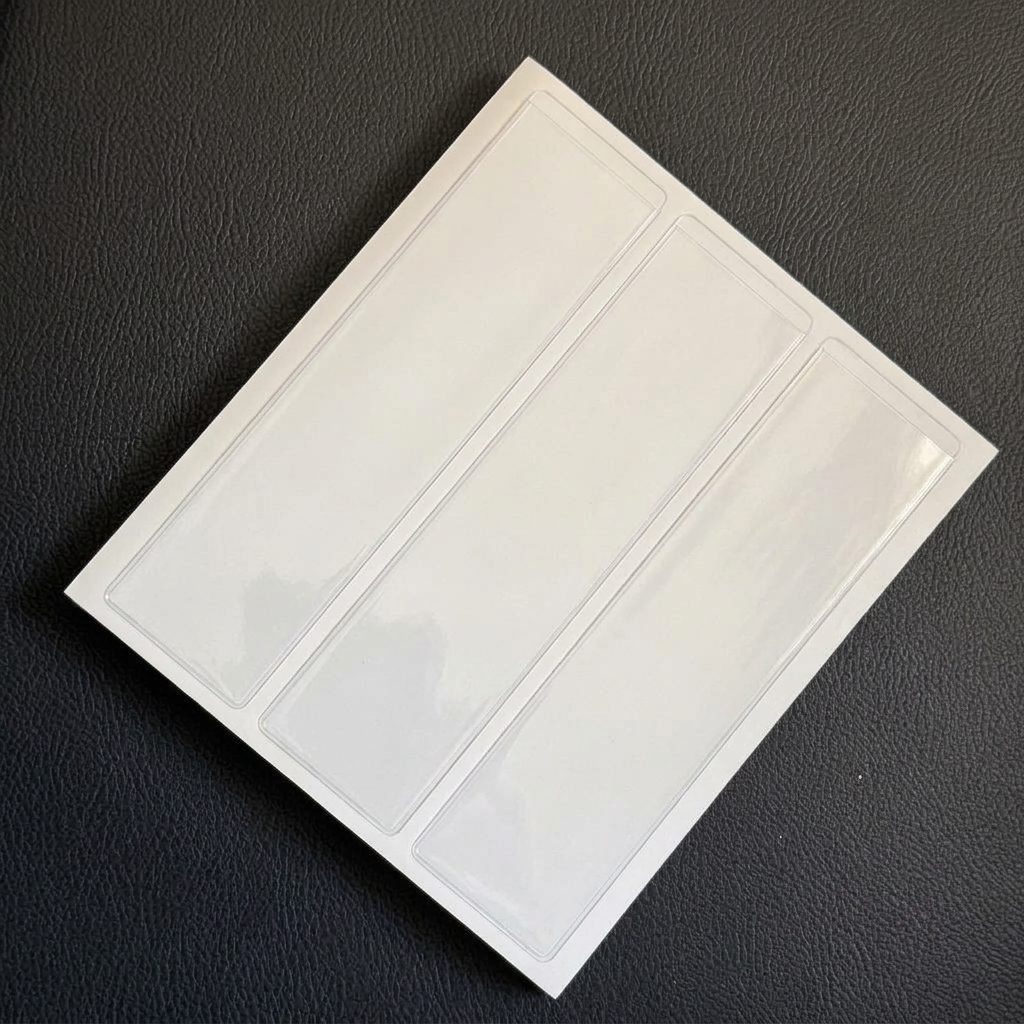
View Prices and Buydukkan.aso.com.tr (Turkish shop) · binder spine pocket
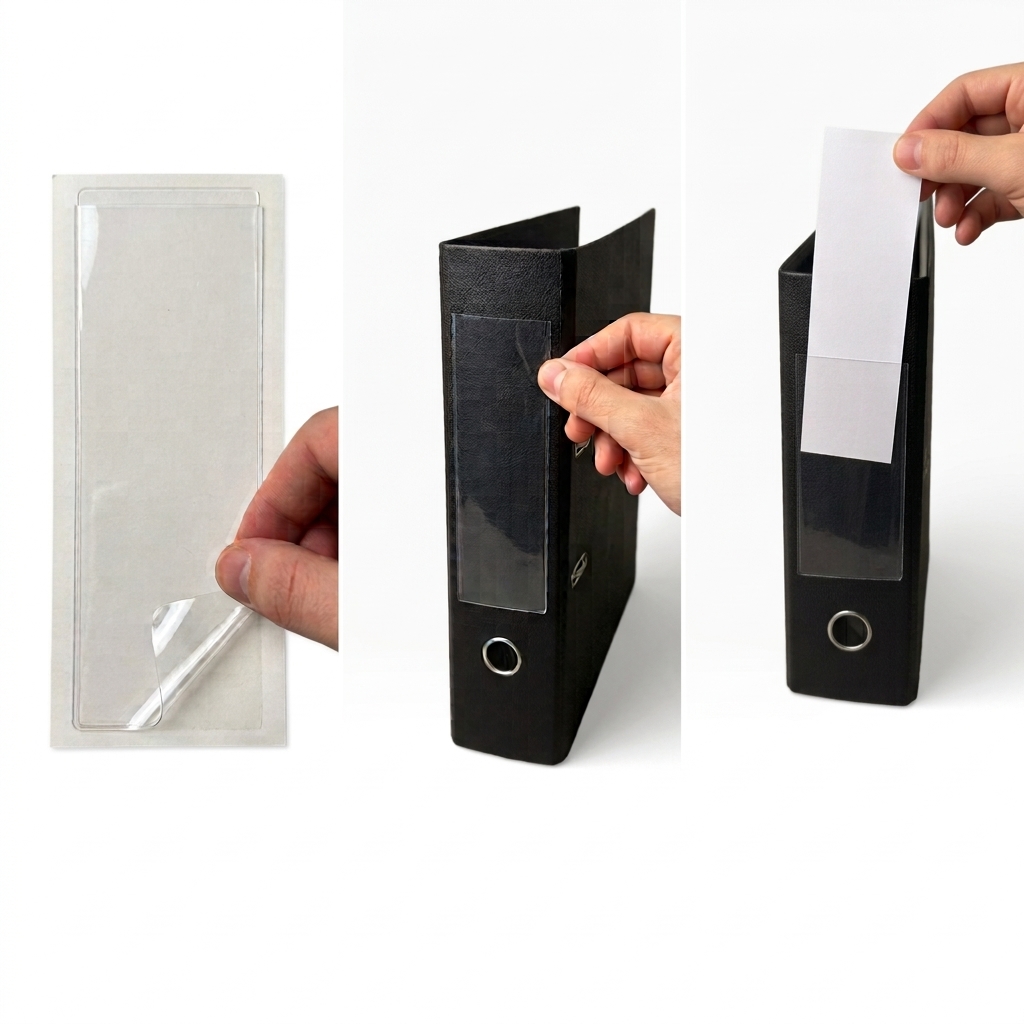
What takes the most time when managing an archive of dozens or even hundreds of binders? Finding the right one. Torn, faded or illegible spine labels make it even harder. A self-adhesive plastic binder spine pocket solves this at the root: it is stuck to the spine once, a label goes inside, and when the label needs changing you just pull out the paper without touching the pocket. This page explains how it works, the difference between the two sizes and how it is used in different archives.
The binder label problem and a permanent solution
Traditional spine labels suffer from three recurring problems:
- Tearing: when a binder is taken off the shelf and put back often, the spine label starts tearing at the corners.
- Residue: peeling off a stuck-on label leaves glue residue or discolouration on the spine.
- Hard to update: when contents change, people stick a new label over the old one or replace the binder entirely.
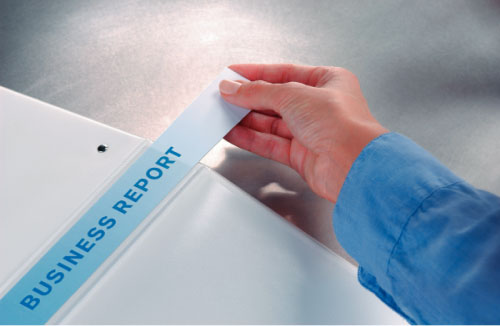
The self-adhesive PVC pocket removes all three problems at once. The pocket stays permanently on the binder, while the label sits loosely inside. When the contents change, you simply pull out the paper and insert a new one.
Product specifications
| Feature | 3.5 × 19 cm | 5 × 19 cm |
|---|---|---|
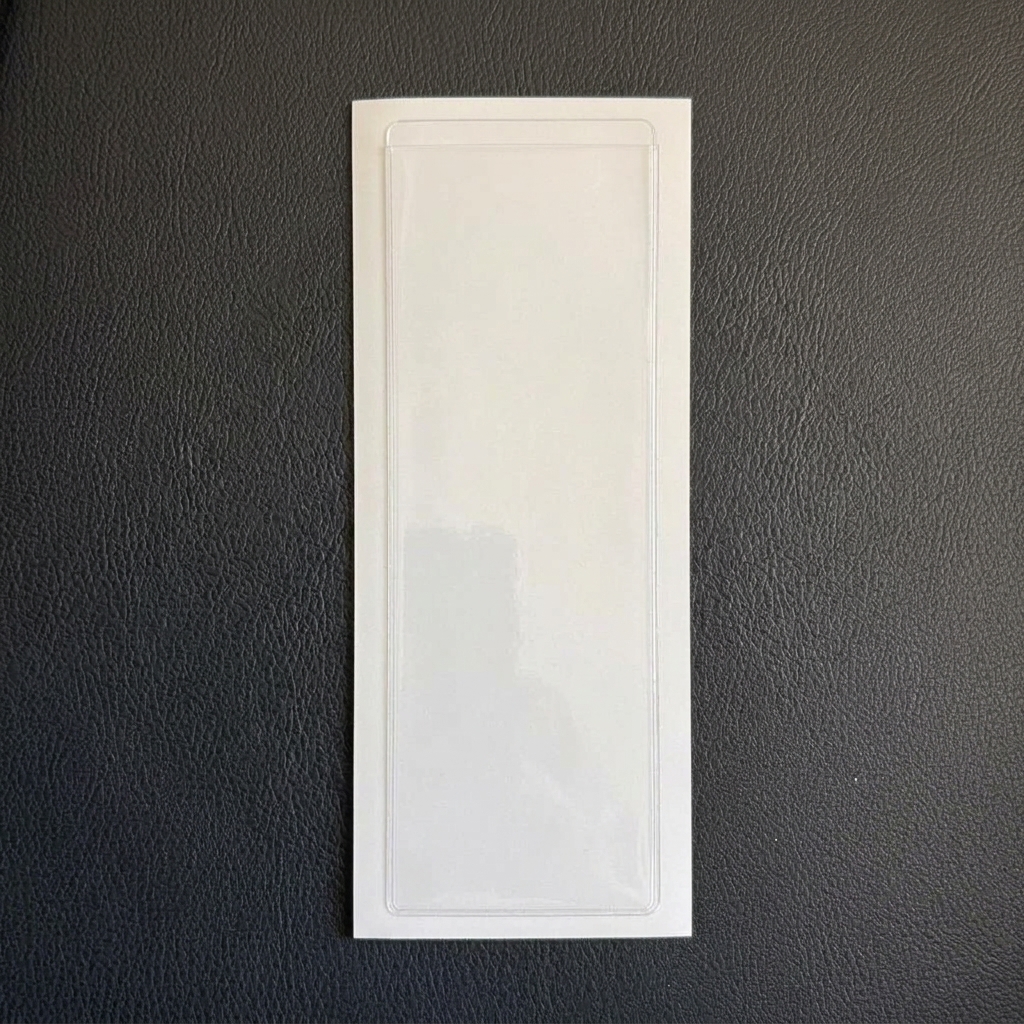
| Outer size | 3.5 × 19 cm | 5 × 19 cm |
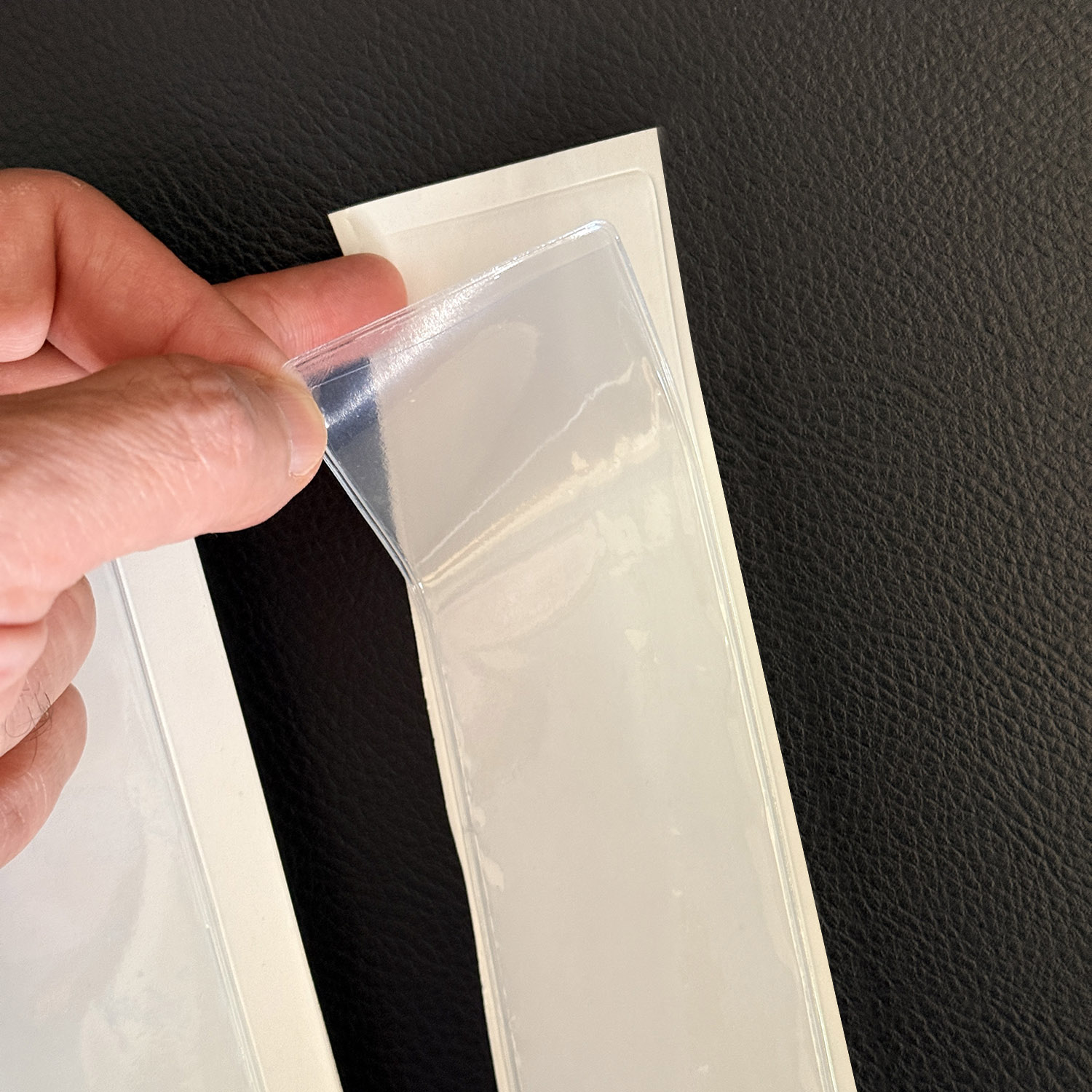
| Material | 180 micron clear PVC | 180 micron clear PVC |
| Adhesive | Self-adhesive back | Self-adhesive back |
| Label system | Removable paper label | Removable paper label |
| Suitable spine width | Binders with 2–4 cm spines | Binders with 4–6 cm spines |
| Custom size | Made on request | Made on request |
The difference between 3.5 × 19 cm and 5 × 19 cm
The only deciding factor is the spine width of your binder. The 1.5 cm difference looks small, but the wrong model causes problems: a narrow pocket may bend or the label may not fit, while a wide pocket overhangs the binder edges, spoils the look and rubs against other binders on the shelf.
3.5 × 19 cm – narrow and medium binders
Most narrow and medium binders with standard 4–5 cm mechanisms fit this model. It matches the most common spine widths in offices.
5 × 19 cm – thick, wide-spine binders
Large archive binders with 8 cm mechanisms, wide-spine ring files and binders holding many documents suit this size better. The wide model is also good if you want more information on the label (project code, date range, department).
Where is it used?
Accounting and financial archives
Invoice, tax return and contract binders sorted by year need labels that stay legible for years. The PVC pocket protects the label from moisture and dust, supporting long-term order.
Law office file shelves
In binders sorted by file number and client name, contents change often: a new case, a transferred file or a closed year means updating the label. The pocket makes these updates a matter of seconds.
School and university archives
For student files renewed every term, teaching materials and administrative documents, a reusable label system is practical and economical. Binders can be reused many times with different contents.
Warehouse and stock management
To show the contents of product binders or document boxes on shelves, a pocket is far more sustainable than stick-on labels. When stock changes, the label is updated in 5 seconds.
Why 180 micron?
Most similar-looking products are made from 80–100 micron PVC. This product uses 180 micron – almost twice as thick. That gives three concrete advantages:
- Long life: thin PVC soon cracks or deforms as labels go in and out; 180 micron keeps its shape for years.
- Resists yellowing: thick PVC yellows more slowly under UV light and air, so the label stays clearly legible longer.
- Better adhesion: the thicker base spreads the adhesive layer better, giving a stronger bond on first application.
3.5 × 19 cm and 5 × 19 cm sizes are in stock. Quantity discounts apply:
- 1,000–2,900 pcs → 15% off
- 3,000–4,900 pcs → 20% off
- 5,000 pcs and more → 30% off
→ Self-adhesive binder spine pocket – view and order at ASO Dükkan
How to apply
Fitting a spine pocket takes only seconds:
- Check the surface: make sure the spine is clean, dry and flat; dust or moisture reduces adhesion.
- Expose the adhesive: carefully peel the silicone liner from the back; do not touch the adhesive with your fingers.
- Align and press: centre the pocket on the spine and press from the middle outwards.
- Insert the label: slide your paper label into the pocket; laser or inkjet printouts work well.
Later, to update the label you only repeat step 4 – no need to remove the pocket.
Frequently asked questions
What is the main difference between a spine pocket and a stick-on label?
A stick-on label is attached directly to the spine, leaves residue when removed and can tear. A spine pocket is fixed once, and the paper label inside can be removed and replaced without residue – much more sustainable for archives that change often.
How do I choose the size?
Measure your binder’s spine. Choose 3.5 × 19 cm for 2–4 cm spines and 5 × 19 cm for 4–6 cm spines; if unsure, pick the model closest to and slightly wider than your spine.
Do I need to prepare the label paper myself?
Yes, paper labels are not included. Cut standard A4 paper or print to size on a laser/inkjet printer: about 3 × 18 cm for the 3.5 × 19 cm model and 4.5 × 18 cm for the 5 × 19 cm model.
Can the pocket be removed once stuck?
The adhesive is designed for long-term hold; forced removal can leave residue. It is best for fixed archive shelves rather than binders that move around constantly.
Can custom sizes be ordered?
Yes, custom sizes are produced besides the standard 3.5 × 19 cm and 5 × 19 cm; contact us via the ASO Dükkan product page.
Which binders can it be applied to?
Any binder with a flat, clean card, board or plastic surface. Adhesion may be weaker on fabric-covered, embossed or very rough surfaces – test first.
Related products: printed box files and folders · logo-printed binders (TR)

